Tuesday, February 23, 2010

How Much Lidocaine Gets U High

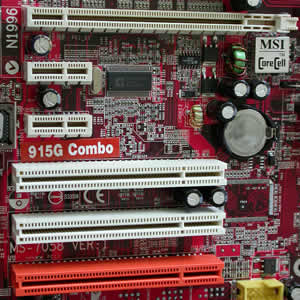
PCI Express PCI and AGP ports


PCI


Ports PCI (Peripa


Heral Component Interconnect) expansion slots are the motherboard of a computer where you can connect sound cards, video, network, etc ... The slot PCI is still used today and can find a lot of parts (mostly) in PCI format. Within the PCI slots is the PCI-Express. The components are usually available in this slot are:


PCI-Express


Main article: PCI-Express

PCI-Express New features for PCIe 3.0 specification include a number of optimizations for enhanced signaling and data integrity, including transmitter and receiver equalization, PLL improvements, clock data recovery, and channel enhancements for currently supported topologies. (anteriormente conocido por las siglas 3GIO, 3 rd

Generation I/O) es un nuevo desarrollo del bus PCI que usa los conceptos de programación y los estándares de comunicación existentes, pero se basa en un sistema de comunicación serie mucho más rápido que PCI y AGP. Este sistema es apoyado, principalmente, por Intel, which began developing the standard with the project name after retiring Arapahoe Infiniband system. Transfer speed is 16x (8 GB / s ) and used in graphics cards.


Diagram Of Frozen Shoulder


AGP
A Ccelerate G raphics P ort ( AGP, Accelerated Graphics Port, sometimes called A dvanced G raphics P ort , Puerto Advanced Graphics) is a port (since you can only connect one device, while on the bus can connect multiple) developed by Intel in 1996 as a solution to the bottlenecks that occurred in the graphics cards used the PCI bus. The design of the PCI specifications 2.1.

The AGP port is 32 bit and PCI but with notable differences as additional 8 channels for access to RAM . You can also directly access this through the north bridge can emulate video memory and RAM. bus speed is 66 MHz

Bus AGP has different modes of operation.

  • AGP 1X: speed 66 MHz with a transfer rate of 266 MB / s and operating at a voltage of 3.3 V.
  • AGP 2X: speed 133 MHz with a transfer rate of 532 MB / s and operating at a voltage of 3.3 V.
  • AGP 4X: speed 266 MHz with a transfer rate of 1 Gb / s operating at a voltage of 3.3 or 1.5 V to fit the designs of graphics cards.
  • AGP 8X: speed 533 MHz with a transfer rate of 2 Gb / s operating at a voltage of 0.7 V or 1.5 V.

These transfer rates are achieved by taking advantage of cycles bus clock by multiplying but physically modify ..

The AGP port is used exclusively to connect graphics cards, and because its architecture can be only one slot. This slot is about 8 cm and is next to the PCI slots .


Thursday, February 18, 2010

Bingo Board Electronic


In electronics, a power supply is a device that converts AC voltage continuous, feeding the various circuits electronic device you connect to (computer, television, printer, router, etc.).

supply network in one or several strains, virtually

Rating

power supplies for electronic devices, can be classified mainly as linear power supplies and switches. The linear with a relatively simple design, which can become more complex the higher the current to be supplied, however their voltage regulation is very efficient . A switching power supply, the same power as a linear will be smaller and usually more efficient but is more complex and therefore more susceptible to breakdowns.

Linear Power

linear sources, follow the pattern: transformer, rectifier, filter, and output regulation. First, the transformer adapts the voltage levels and provides galvanic isolation. The circuit that converts alternating current continually called rectifier, then usually have a circuit that reduces the ripple as a filter capacitor . Regulation, or stabilization voltage to a value set, is achieved with a component called voltage regulator. The output can be simply a capacitor.

A switching power supply is an electronic device that converts electrical energy by switching transistors. While a voltage regulator uses transistors biased in the active region of amplification, the sources

TES switched actively use the same switch at high frequencies (20-100 KHz typically) from cut (open) and saturation (Closed). The resulting square waveform is applied to core transformers ferrite (iron cores are not suitable for these high frequencies) for one or more output voltages of alternating current (AC) which are then ground (with gave two quick

) and filtered (inductors and capacitors) for output voltages of direct current (DC). The advantages of this method include smaller size and kernel weight, increased efficiency, thus less heat. The disadvantages comparing with linear sources is that they are more complex and generate high-frequency electrical noise that must be carefully minimized to avoid causing interference to nearby equipment to these sources.

Switching Power Supply

sources are switched scheme: rectifier, switch, transformer, rectifier and other output. The control is obtained with the switch, typically a PWM circuit Pulse Width Modulation), changing the duty cycle. Here the functions of the transformer are the same as for line sources, but their position is different. The second rectifier converts alternating pulse signal coming from the transformer into a continuous value. The output can also be a filter capacitor or an LC type . (

The advantages of open source is a linear better regulation, better speed and EMC characteristics. On the other hand, the switched gain a better performance, lower cost and size.

Specifications

A fundamental specification of power is the yield, defined as total output power between active power input. As mentioned earlier, switching power supplies are better in this aspect.

The power factor is the active power between the input apparent power. Is a measure of the quality of the stream.

Apart from reducing the ripple as possible, the source must maintain the output voltage to the voltage applied regardless of fluctuations in the line, line regulation or charge required by the circuit load regulation.

Special Power

Among the alternative power sources, we can find where the power is delivered to the load is being controlled by transistors, which are controlled in phase to deliver the power required to load.

Other alternative sources of power, scheduled and special are those where the frequency is varied, keeping the voltage amplitude achieving a variable font effect in cases such as motors and transformers in voltage ...


Small White Particles Urine

METER POWER SUPPLY

The meter is a measuring instrument also well-known names: VOM (Volts, Ohms, Milliammeter), Tester, tester.
Currently there multimeters capable of measuring many other quantities. (Capacitance, frequency, temperature, etc.)..

This measuring instrument for its price and its accuracy is still the favorite of amateur and professional electronics.
Other instruments such as oscilloscope that has a higher price and is used to make measurements more informative.

There are two types of multimeters: The analog meter and the digital multimeter. View: Analog and Digital.
analog multimeters

analog multimeters are easily identified by a needle that moves over a scale indicates the value of the measured quantity.

Digital multimeters

The DMM are identified primarily by a number pad to read the measured values, the absence of the common scale is the analog mulímetros . See graph at right.

What we do have is a function selector and range switch (some have no range switch as the VOM automatically determined). Some have a single central switch.

The function selector used to choose the type of measurement to be performed. See the chart below as locating the selector functions for measuring voltage AC and DC, AC , DC and resistance.

selector ranges multimeter is used to set the maximum value that can be displayed.

If you have an idea of \u200b\u200bthe magnitude to begin measuring the largest range.

This prevents damage or deterioration of multimeter. See some examples in the table on the right. See

that always choose a higher rank than the magnitude being measured.

http://diagnosticautomotriz.com/wp-content/uploads/2008/08/380-multimetro-digital-con-funda.jpg


Hot Woman Wearing Stockings


A hard disk or hard drive (in English hard disk drive) is a non-volatile device, which retains information even with the loss of energy, which uses a system of digital magnetic recording . Inside the case is a series of stacked metal plates spinning at high speed. Dishes are placed on the heads in charge of reading or writing magnetic impulses. There are different standards to communicate a computer hard drive, the most common interfaces are Integrated Drive Electronics (IDE, also called ATA), SCSI generally used in servers, SATA , the latter standard in the year 2004 and FC only for servers.

As shipped, the hard disk can not be used by an operating system. Before you should define him as a low-level format , one or more partitions and then we give them a format that can be understood by our system.

There is another type of disc called solid state using a certain type of memory semiconductor built to store information. The use of such records is generally limited to SuperC omputer of its high price, even today and can be found on the market much more affordable units of low capacity (up to 512 [ 1 ] GB) for use on personal computers (especially laptops). Thus, RAM cache Within a solid state hard drive. track is a solid state memory, such

His translation of English is hard drive, but this term is rarely used because of the practicality of the term of a lesser extent hard disk (or disk rigid).


SATA HDD

Serial ATA or SATA ( acronym of Serial Advanced Technology Attachment) is an interface for transferring data between the motherboard and some storage devices , such as the hard disk, or other high performance devices are still being developed. Serial ATA replaces the traditional Parallel ATA or P-ATA . SATA provides faster speeds, better use when multiple disks, longer length of cable for data transmission and the ability to hot-plug disks (with the computer on.)

is now a widely accepted and standardized interface on the PC motherboard. The Serial ATA International Organization (SATA-IO) is the group responsible for developing, managing and driving the adoption of Serial ATA standard specifications. The SATA interface users benefit for better speed, upgradeable storage devices more simple and easier configuration. The SATA-IO objective is to drive industry adoption of SATA defining, developing and setting the standard specifications for the SATA interface.


EXTERNAL HARD DRIVE

A portable hard drive (or external hard drive ) is a hard disk that is easily transportable from one side to another.

Since the CD-R and CD-RW is have spread like cheap storage, it has changed the philosophy of having the same type of storage for both exchangeable disk storage to backup or disposal. Before they were usually magnetic disks or magneto-optical . Now it tends to have the optical storage for later use final and interchangeable medium without disks for transport. This is the case of USB memory and portable hard drives.


Nerf Gun Birthdya Party Invites

HDD Video Card Binary Code

A graphics card, video card, video card, accelerator card graphics or display adapter is an expansion card to computer, responsible for processing data from the CPU and turn them into understandable information and representable in an output device such as a monitor or TV. The most common graphics cards are available for computers compatible with IBM PC, due to the enormous popularity of these, but other architectures also make use of such devices.

It is common to use the same term to both common and separate dedicated card like the GPU built into the motherboard.
Some graphics cards have offered additional functionality as video capture, TV tuner, MPEG-2 decoding [1] and MPEG-4 or Firewire connectors, mouse, stylus or joystick.


graphics cards are not the exclusive domain of PC, or have told them devices like the Commodore Amiga (connected by the slots Zorro II and Zorro III), Apple II, Apple Macintosh, Spectravideo SVI-328, MSX computers and, of course, modern games consoles like the Wii, the Playstation 3 and Xbox360.


GPU GPU, "acronym for graphics processing unit" which means "GPU" - is a processor (such as CPU) dedicated to graphics processing, its raison d'être is to lighten the workload of the CPU and, therefore, is optimized for floating point calculations, predominantly in the 3D functions. Most of the information provided in the specification of a graphics card refers to the characteristics of the GPU, since it is the most important part of the card. Two of the most important of these features are the core clock frequency, which in 2006 ranged between 250 MHz in low-end cards and 750 MHz in high-end, and the number of pipelines (vertex and fragment shaders) responsible to translate a 3D image composed of vertices and lines into a 2D image composed of pixels. VIDEO MEMORY


As the graphics card is integrated into the motherboard (low performance) or not, use the computer's own RAM memory or have your own. This memory is video memory or VRAM. Their size ranges from 128 MB to 4 GB. The memory used in 2006 was based on DDR technology, highlighting GDDR2, GDDR3, GDDR4 and GDDR5. The frequency of memory clock was between 400 MHz and 3.6 GHz

Samsung has managed to make a 7GHz GDDR5 memory, thanks to a reduction of 50 nm, allowing high bandwidth in very small buses (including 64-bit)

An important part memory of a video adapter is the Z-Buffer, which manages the depth coordinates of the images in 3D graphics.

Thursday, February 11, 2010

Legal Power Of Attorney Templates


binary code binary code is the text representation system, or computer instruction processors, using the binary (two-digit number system, or bit: "0" and "1") . In computing and telecommunications, the binary code is used with various methods of encoding data such as strings, or strings of bits. These methods can be fixed width or variable width.

In a fixed-width binary code, each letter, digit, or other symbols, are represented by a bit string the same length as a binary number, usually listed in the tables in octal, decimal or hexadecimal.

http://es.wikipedia.org/wiki/Codigo_binario

Video explaining binary code and hexadecimal code, but I leave it as complementary to the class because I believe that the method that is easier to explain to them.

http://www.youtube.com/watch?v=T4p-HP1i5Ek

Chronotherm Iv Plus Install Diagram

International System of Units

International System of Units

The International System of Units (abbreviated SI from the French : Le Système International d'Unités ), also called the International Measurement System, is the name given to unit system used in most countries and is the current metric . The SI is also known as the "metric system", especially in nations which has not yet been implemented for daily use.
http://es.wikipedia.org/wiki/Sistema_Internacional_de_ उनिददेस


Tuesday, February 9, 2010

Dry Clean Slogans For The New Year

Terms Relating

Good night
The following links refer to processors, and computer history, I recommend you see them all to understand better what will be seen in the following classes.
Architecture History
graphics processors of Intel Microprocessors
http://www.youtube.com/watch?v=xlYGDlaADcI&NR=1


http://www.youtube.com/watch?v = LzCuW39Tna8 & NR = 1

Within the PC
http://www.youtube.com/watch?v=lYXiYU1v-xU&feature=related

Dual Core Technology
http://www.youtube.com/watch?v=DsMKMHYWVrY&feature=related

Cooling Systems CPU Heatsink


http://www.youtube.com/watch ? v = VKbhuU2VQck

heatsink installation
http://www.youtube.com/watch?v=RYD9TLN4qpM&feature=related

art advanced PC cooling
http://www.youtube.com / watch? v = tkjotQ0k3fk & feature = related


COMPUTER HISTORY VIDEOS OPTIONAL (HIGHLY RECOMMENDED)
Videos to watch from past to future.
"we are in the stone age of computer" The computer age has not started a "

http://www.youtube.com/watch?v=OJx36OuvaUI&feature=related
http:/ / www.youtube.com/watch?v=6S50UK_UiCs&feature=related
http://www.youtube.com/watch?v=h4qNH_fJzXY&NR=1
http://www.youtube.com / watch? v = scT7Hllcvus & NR = 1
http://www.youtube.com/watch?v=lYYfcpJLjRA&NR=1

Free Online Acrostic Poem Generator


hello, I found an entry in a very interesting blog that help them answer questions.

"Different technologies?

Please do not confuse technology and terms, Hyper Trading is the ability of processors to double the processing, showing the machine as having two processors and Intel technology. AMD
not left behind in improving the performance of their machines, implementing Hyper Transport. Dual Core processors are Intel's new technology for its Pentium D, which we can highlight the all-powerful Intel Extreme Edition, which besides being Dual Core, Hyper Trading has, allowing us to see the machine as have four processors. The
XEON processors are targeted at the corporate market for servers, and is also implementing Dual Core. Oh and do not forget that it can handle with the Board over a 1024 front side buses and PCI Express, and major improvements in memory EM64T. As for 64-bit systems, in order to take advantage of this capability operating systems and programs that run on your machine, they must be capable of addressing 64-bit, because if you just do not work at 32 bits, and you'd be wasting your machine, in other words if you want your performance 64-bit operating system must be a 64-bit Windows XP or a Linux distribution with a kernel greater than it can seize the property, as for MACINTOSH do not forget that OS X is linux based.

Kate Playground Jeans

Introduction

Introduction

The processor (CPU by Central Processing Unit or Central Processing Unit), is to put it in some way, the computer's brain. Allows the processing of numeric data, meaning information entered in binary format and the execution of instructions stored in memory.

The first microprocessor (Intel 4004) was invented in 1971. It was a calculation device 4 bits at a speed of 108 kHz. Since then, the power of microprocessors has increased exponentially. What exactly are these little pieces of silicone that operate a computer?

Procesador <span class=

Operation

The processor (CPU called for Central Processing Unit) is an electronic circuit that operates at the speed of an internal clock thanks to a quartz crystal, subjected to an electric current, sends pulses, called " peaks." The clock speed (also called cycle) corresponds to the number of pulses per second, expressed in Hertz (Hz). Thus, a computer has a 200 MHz clock sends pulses per second 200,000,000. Usually, the clock frequency is a multiple of the system frequency (FSB , Front-Side Bus Bus or front), ie a multiple of the frequency of the motherboard .

With each clock peak, the processor performs an action that in turn corresponds to an instruction or a part of it. The measure CPI (Cycles Per Instruction or Cycles per Instruction) represents the average number of clock cycles required for the microprocessor to execute an instruction. Consequently, the power of the microprocessor may be characterized by the number of instructions per second which is capable of processing. The MIPS (millions of instructions' per second or millions of instructions per second) are the units used, and correspond to the processor's frequency divided by the number of ICC .

Instructions

A statement is an elementary operation that the processor can meet .. The instructions are stored in main memory, waiting be treated by the processor. The instructions have two fields:

  • the operation code that represents the action that the processor must run;
  • the operating code, which defines the parameters of the action. The code is in turn running the operation. It can be both information and a memory address.

Operation Code Field Operation


The number of bits in an instruction varies according to the type of information (between 1 and 4 bytes of 8 bits).

The instructions can be grouped into different categories. Here are some of the most important

  • Access Memory: Memory access or transfer information between registers.
  • Arithmetic: operations such as addition, subtraction, division or multiplication.
  • Logical Operations: operations such as AND, OR, NOT, NOT EXCLUSIVELY, etc.
  • Control: controls sequence, conditional connections, etc.

Records

When the processor executes instructions, the information stored temporarily in small local memory locations 8, 16, 32 or 64 bits, called records. Depending on the type of processor, the total number of records can vary from 10 to several hundred.

most important records are:

  • the accumulator (ACC ), which stores the results of arithmetic and logic operations;
  • the status register (PSW , Processor Status: Word or Word Processor State), which contains the system status indicators (leading digit, overflow, etc. .)
  • the instruction register ( RI), which contains the instruction currently being processed;
  • the ordinal counter (OC or by PC Program Counter , Program Counter), which contains the address of the next instruction process;
  • the registration buffer that temporarily stores information from memory.

Cache

The cache (also buffer memory) is a fast memory that reduces waiting times of the various information stored in RAM (Random AccessMemory or Random Access Memory). Indeed, the main memory computer is slower than the processor. There are, however, memory types are much faster, but have a higher cost. The solution is therefore to include this type of local memory near the processor and temporarily store the primary data to be processed in it. The latest computer models have many different levels of cache:

  • The Level 1 Cache (L1 Cache called for Cache Level 1) is integrated directly into the processor. Is divided into two parts:
    • the first part is the instruction cache containing instructions that were decoded RAM during its passage through the pipes.
    • second parte es la caché de información, que contiene información de la RAM, así como información utilizada recientemente durante el funcionamiento del procesador.


El tiempo de espera para acceder a las memorias caché nivel 1 es muy breve; es similar al de los registros internos del procesador.
  • La memoria caché nivel 2 (denominada L2 Cache , por Level 2 Cache ) se encuentra ubicada en la carcasa junto con el procesador (en el chip). La caché nivel 2 es un intermediario entre el procesador con su caché interna y la RAM. Se puede acceder más rápidamente que a la RAM, but not enough to level 1 cache.
  • The Level 3 cache (L3 Cache called for Cache Level 3) is located on the motherboard.

All these levels of cache reduces the latency of various types of memory processing or transfer information. While the processor is running, the driver of the level 1 cache controller can interface with the Level 2 cache, in order to transfer information without impeding the operation of the processor. Also, the level 2 cache interfaces with the RAM (cache level 3) to allow transfers without impeding the normal functioning of the processor.

Control Signals

The control signals are electronic signals that orchestrate the various processor units involved in the execution of an instruction. These signals are sent using an element called sequencer. For example, the signal Read / Write allows memory learn that the processor wants to read or write.

Functional Units

The processor consists of a group of interrelated units (or units of control). Although microprocessor architecture varies considerably from one design to another, the main elements of the microprocessor are:

  • A control unit that links the incoming data, decodes it and send it to the unit of implementation: control unit consists of the following elements:
    • sequencer (or monitor and logic unit ) that synchronizes the execution of the instruction clock speed. It also sends control signals
    • ordinal counter, which contains the address of the instruction currently being executed;
    • instruction register, which contains the following statement.
  • A execution unit (or processing unit), which carries out the tasks assigned to the unit of instruction. The execution unit consists of the following elements:
    • the arithmetic logic unit (ALU is written) is for the implementation of basic arithmetic and logic functions (AND, OR, XOR, etc.).
    • the floating point unit (FPU written) that performs complex calculations partial arithmetic logic unit can not be done
    • the status register;
    • the accumulator.
  • A management unit bus (or drive O) that manages the flow of incoming and outgoing information, and is interconnected with the system RAM ;


The diagram below provides a simplified representation of the elements of the processor (the physical layout of the elements is different from the layout):

Diagrama <span class=

Transistor

order to process the information, the microprocessor has a set of instructions, called instruction set ", made possible by electronic circuits. More precisely, the set of instructions is performed with the aid of semiconductors, small "switches de circuito" que utilizan el efecto transistor , descubierto en 1947 por John Barden , Walter H. Brattain y William Shockley , quienes recibieron por ello el premio Nobel en 1956.


Un transistor (contracción de los términos transferencia y resistor ) es un componente electrónico semi-conductor que posee tres electrodos capaces de modificar la corriente que pasa a través suyo, utilizando uno de estos electrodos (denominado electrodo de control). Éstos reciben el nombre de "componentes activos", en contraste a los "componentes pasivos", tales como la resistance or capacitors, with only two electrodes (which is called "bipolar").

The MOS transistor ( metal, oxide, silicon ) is the most common type of transistor used in integrated circuit design. MOS transistors have two negatively charged areas, respectively called source (with near-zero overhead), and drainage (with a load of 5V), separated by a positively charged region, called substrate . The substrate has an overlay control electrode, called door, allowing the load applied to the substrate.

Transistor <span class=

When a voltage is applied to the control electrode, the positively charged substrate acts as a barrier and prevents the movement of electrons from source to drain. However, when the load is applied to the gate, the positive charges of the substrate are repelled and opening a communication channel with a negative charge between the source and drain.

Transistor <span class=


The transistor then acts as a programmable switch, thanks to the control electrode. When a load is applied to the control electrode, it acts as a switch closed and no load, it acts as a switch open.

Integrated Circuits

Once combined, the transistors can make logic circuits which, when combined, form processors. The first integrated circuit dates back to 1958 and was built by Texas Instruments .

MOS transistors are therefore made of silicon wafers (wafers called ), obtained after multiple processes. These silicon wafers cut into rectangular elements to form a "circuit ." The circuits are then placed in cases with input / output connectors, and the sum of these parts makes a " integrated circuit." The extent of the engraving, expressed in microns (micrometers, microns writes ) defines the number of transistors per unit area. There may be millions of transistors on a single processor.

The Moore's Law, written in 1965 by Gordon E. Moore, cofounder of Intel, predicted that the processor performance (by extension the number of transistors integrated in the silicone) would double every 12 months. This law was revised in 1975, and changed the number of months to 18. Moore's Law is still valid today.

Since the rectangular enclosure containing O pins that look like legs, France uses the term "electronic flea " to refer to integrated circuits.

Families

Each type of processor has its own set of instructions. The processors are grouped into the following families, according to their unique instruction sets:

  • 80x86: the "x" represents the family. Referred to 386, 486, 586, 686, etc. ARM
  • IA-64 MIPS
  • Motorola 6800 PowerPC
  • SPARC
  • ...


This explains why a program produced for a specific type of processor can only work directly on a system with another type of processor if it performs what is called instruction translation or emulation . The term " emulator is used to refer the program that performs the translation.

Instruction Set

A instruction set is the sum of the basic operations can play a processor. The instruction set of a processor is a factor in the architecture of it, but the same architecture can lead to different implementations by different manufacturers.

The processor runs efficiently thanks to a limited number of instructions, permanently connected to the electronic circuits. Most operations can be performed using functions basic. Some architectures, however, do include advanced signal processing functions.

CISC Architecture Architecture

CISC (Complex Instruction Set Computer , Computer Complex Instruction Set) refers to the permanent connection with the instructions of the processor complex, difficult to create from basic instructions.

CISC architecture is especially popular type 80x86 processors. This type of architecture is costly because of the advanced features printed on the silicone.

The instructions are of varying length, and sometimes require more than one clock cycle. Since the processors based on the CISC architecture can only process one instruction at a time, processing time is a function of the size of the instruction.

Architecture RISC processors technology RISC (Reduced Instruction Set Computer , Instruction Set Computer Reduced) do not have advanced features connected permanently.

is why programs must be translated into simple instructions, which complicates the development or necessary to use a more powerful processor. This type of arquitecturaprocesadores CISC. In addition, instructions for simple nature run in one clock cycle, accelerating the implementation of the program when compared to CISC processors. In conclusion, these processors can handle multiple instructions simultaneously, processing them in parallel. production cost is reduced when compared with Technological Improvements

Over time, manufacturers of microprocessors (called founders ) have developed a number of enhancements that optimize the performance of the processor.

Parallel Processing

The parallel processing is the simultaneous execution of instructions from the same program on different processors. Involves dividing the program into multiple processes handled in parallel to reduce execution time.

However, this type of technology requires synchronization and communication between the various processes, similar to what can happen when you break a task into a Company: work is distributed in smaller batch processes that are managed by different departments. Running a business can be affected greatly if the communication between the various internal services not working properly.

Channeling

is called channeling to technology to improve speed of execution of instructions by placing the various stages in parallel.

To understand the mechanism of channeling, you must first understand the stages of instruction execution. The stages of execution of an instruction for a processor with channeling "classic" 5 steps are:

  • RECOVERY: ( retrieves the instruction cache;
  • DECODING: decodes the instruction and look operands (register or immediate values);
  • PERFORMANCE: executes instruction (for example, in the case of an ADD instruction, performing a sum, if an instruction SUB, performing a subtraction, etc.).
  • MEMORY : access memory, and writes or retrieves data from there;
  • POST SCRIPT (remove) : records the value in a register.


The instructions are arranged in lines in memory and are loaded one after another.

Thanks to the pipeline, the instruction processing requires only five steps above. Since the order of steps is invariable (RECOVERY, DECODING, PERFORMANCE, MEMORY, POST SCRIPT), you can create dedicated circuits for each of them in the processor.

The aim of the pipeline is executing each step in parallel with the preceding and following steps, which involves reading the instruction (RECOVERY) while reading the previous step (decoding), the time step above is being executed (execution) while the previous step is being written in the memory (MEMORY), and the first step in the series is recorded in a register (POST SCRIPT).

Canalización de 5 pasos


In general, should be planned 1 or 2 clock cycles (more rarely) for each step in pipeline, or a maximum of 10 clock cycles per instruction. For two statements, it takes a maximum of 12 clock cycles (10 +2 = 12 instead of 10 * 2 = 20) since the previous statement was already in the pipeline. Both instructions are processed simultaneously, albeit with a delay of 1 or 2 clock cycles. For 3 instructions will need 14 clock cycles, etc.

The principle of the pipeline can be likened to an automotive assembly line. The car moves from one workstation to the other along the line assembly and when it leaves the factory, it is completely finished. To fully understand the principle must be viewed the assembly line as a whole, and not the vehicle by vehicle. It takes three hours to produce each vehicle, but in reality there is one per minute.

should be noted that there are many different types of pipes, with amounts ranging from 2 to 40 steps, but the principle remains the same.

Superscaling

Superscaling technology is to place multiple parallel processing units to to process multiple instructions per cycle.

HyperThreading technology HyperThreading (HT is written) is to place two logical processors with a physical processor. The system recognizes and two physical processors and behaves as a multitasking system, thus sending two simultaneous threads called SMT (Simultaneous Multi Threading , Simultaneous multiprocessing). This "cheating", as it somehow allows better use of processor resources, ensuring the mass mailing of information it.


Last updated on Friday, April 24, 2009, 12:27:17